 GyanGram
For the Indo-Pacific, a 'G-Minus 2' Strategy: Complete UPSC Analysis
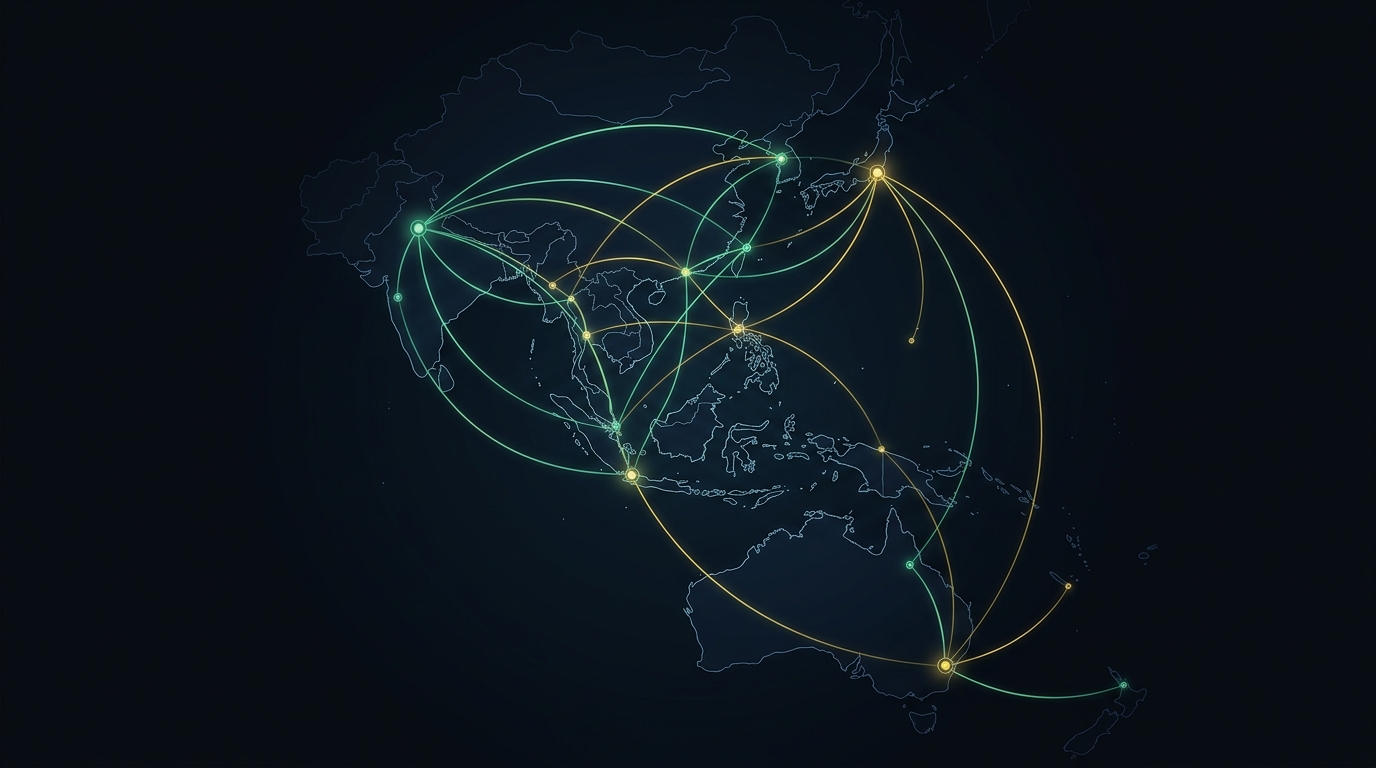
The **"G-Minus Two" (G-Minus 2)** strategy is an emerging Indo-Pacific approach where regional middle powers—including India, Japan, Australia, South Korea, and Indonesia—deepen mutual security and economic cooperation to widen their strategic space. Rather than relying solely on the United States or yielding to Chinese dominance, this strategy aims to build regional resilience and "de-risk" from the weaponization of economic interdependence.
Syllabus Connection
This topic directly maps to the UPSC Civil Services Examination syllabus:
- GS Paper II (International Relations): Bilateral, regional and global groupings and agreements involving India and/or affecting India's interests; Effect of policies and politics of countries on India's interests.
- GS Paper III (Security): Security challenges and their management in border areas; Maritime security in the Indo-Pacific.
For UPSC civil services aspirants, the ongoing shifts in the Indo-Pacific region are highly relevant. As the geopolitical friction between the United States and China intensifies, the role of middle powers is transforming from passive observers into active strategic balancers. Prime Minister Narendra Modi's visits to Indonesia, Australia, and New Zealand highlight a deliberate policy shift toward regional cooperation, providing a practical blueprint for India's strategic autonomy.
I. Understanding 'G-Minus Two': The Geopolitical Context
The concept of "G-Minus Two" is defined in opposition to a potential "G2" world order. A G2, or a US-China condominium, represents a strategic nightmare for regional powers in Asia. In such a scenario, Washington and Beijing would jointly manage regional security, effectively carving up Asia into spheres of influence and severely restricting the strategic autonomy of other nations.
However, the G-Minus 2 strategy is not about middle powers turning their backs on the United States. On the contrary, most Asian countries recognize that a sustained US strategic presence is essential to balance China's massive military expansion. Even if regional powers act in concert, they cannot balance Beijing's weight alone. Therefore, the strategy seeks to bind the United States more closely to regional security, while building independent capacity among Asian nations to handle geopolitical shocks.
"G-Minus Two is not an anti-China coalition or an alternative to the American alliance system. It is a practical effort to build regional economic and security resilience among Asia's major industrial and maritime nations."

II. The Imperative of De-Risking, Not Decoupling
A critical pillar of the G-Minus 2 approach is the economic reality of Asia. Complete commercial decoupling from China is virtually impossible. The trade volumes between China and key Indo-Pacific nations are simply too large to sever without triggering severe domestic economic damage. Instead of decoupling, the objective is "de-risking"—ensuring that Beijing cannot weaponize economic interdependence for political leverage.
This de-risking logic is driven by two factors: China's willingness to use trade barriers as political leverage, and the rise of tariff wars under the US administration. In response, middle powers are diversifying supply chains, securing critical minerals, and building robust local manufacturing alternatives.
| Country/Region | Annual Trade with China | Strategic Role in G-Minus 2 Network |
|---|---|---|
| ASEAN | > $1 Trillion | Geopolitical and geographical heart of the Indo-Pacific (especially Indonesia) |
| Japan | > $300 Billion | Advanced manufacturing, infrastructure finance, and defense technology |
| South Korea | ~ $300 Billion | Shipbuilding capabilities, semiconductor supply chains, and defense production |
| Australia | > $200 Billion | Critical minerals (lithium, rare earths) and Indian Ocean maritime security |
| India | ~ $150 Billion | Net security provider, massive consumption market, and strategic anchor |
III. The Strategic Matrix of Middle Powers
The G-Minus 2 strategy relies on a distributed network of capabilities, where each partner brings unique strengths to widen the collective strategic space:
- Japan: Offers world-class infrastructure finance, advanced industrial manufacturing, and high-tech defense cooperation. Its "Free and Open Indo-Pacific" (FOIP) vision aligns closely with India's maritime objectives.
- South Korea: Serves as a vital hub for critical technologies, offering deep expertise in semiconductors, commercial shipbuilding, and advanced military production.
- Australia: Acts as a key security provider in the eastern Indian Ocean and a major supplier of critical minerals and energy, securing supply chain resilience.
- Indonesia: Positioned at the geographical confluence of the Indian and Pacific Oceans, controlling critical maritime choke points (such as the Malacca, Sunda, and Lombok Straits). Deeper India-Indonesia security cooperation represents a crucial missing link in the regional security architecture.
- New Zealand: Contributes opportunities in trade diversification, higher education, sustainable agriculture, and specialized advanced technologies.
IV. Shifting from Diplomacy to Domestic Delivery
Ultimately, the success of India's G-Minus 2 approach will depend less on summit diplomacy and more on India's internal economic and defense capabilities. If India's economy is uncompetitive or its defense modernization moves slowly, its partnerships with the rest of Asia will remain superficial.
For India to become a credible pillar of the G-Minus 2 network, it must implement deep domestic reforms:
- Defense Industrial Base: Accelerating domestic defense production under "Aatmanirbhar Bharat" to reduce dependency on foreign arms and build export capacities.
- Trade Integration: Participating actively in regional supply chain initiatives, improving ease of doing business, and reducing logistical costs.
- Maritime Capability: Enhancing maritime domain awareness (MDA) in the Indian Ocean, expanding port infrastructure, and building joint naval capabilities with partners.
V. Conclusion
The G-Minus 2 strategy offers a realistic pathway for India and other Asian middle powers to navigate the intense rivalry between the US and China. By building a network of strong, bilateral, and regional partnerships, these nations can prevent a duopoly from dominating Asia, preserving a multipolar order that safeguards regional peace, security, and economic prosperity.
GyanGram Editorial Note
This analysis is based on the column "For the Indo-Pacific, a 'G-Minus 2' strategy" by C. Raja Mohan, published in The Indian Express on July 8, 2026. It has been structured and contextualized for UPSC Civil Services Preparation (GS Paper II & GS Paper III).
Frequently Asked Questions
What is the 'G-Minus 2' strategy in the Indo-Pacific context?
Why are Indian strategists concerned about a US-China 'G2' condominium?
Can Asian middle powers realistically decouple economically from China?
What are the key pillars of cooperation under the G-Minus 2 approach?
Will the 'G-Minus 2' strategy appear in the UPSC 2027 examination?

Study Smarter on GyanGram
Swipeable flashcards. PYQ-mapped topics. Built for UPSC Prelims.