 GyanGram
India's Circular Water Future: Navigating the Crisis and the Cure
Water is the silent backbone of national development. Yet, as climate variability accelerates, reservoir levels fluctuate, and urban centers swell, India is waking up to a stark reality: the traditional model of extracting water, using it once, and disposing of it as waste is no longer sustainable.
To secure our future, India must transition from a linear extraction model to a circular water economy. Below, we break down the core dynamics of India’s water crisis, examine policy successes and paradoxes, and highlight the market-driven and ecological cures that will shape India's circular water future.
I. Introduction: Defining the Crisis
India is currently facing the most severe water crisis in its history, with nearly 600 million people experiencing high to extreme water stress. Despite holding nearly 18% of the global population, the country is sustained by only 4% of the world's freshwater resources. This immense pressure is rapidly driving down per capita water availability, which stood at 1,486 cubic meters in 2021 and is projected to plunge to 1,140 cubic meters by 2050.
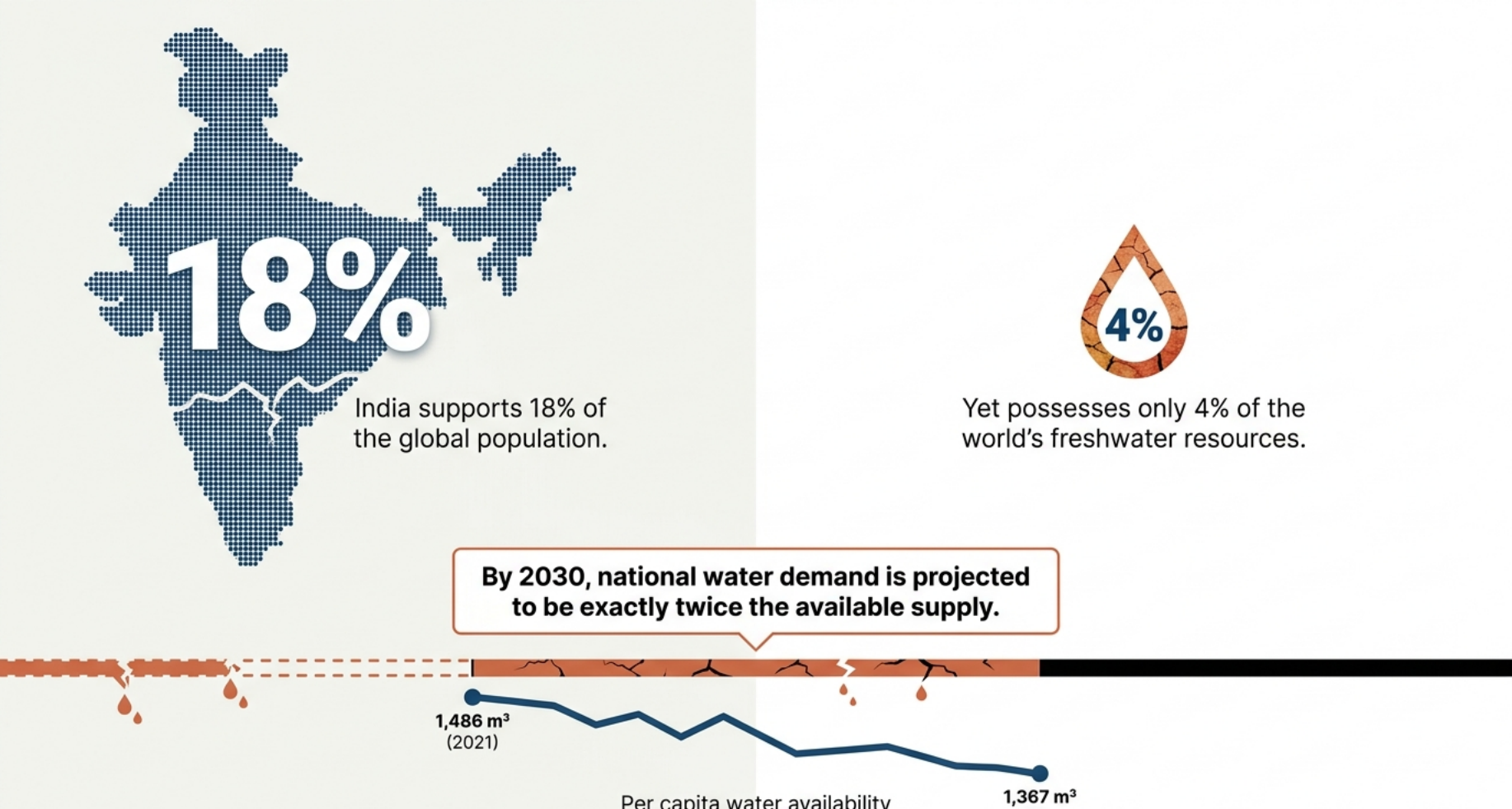
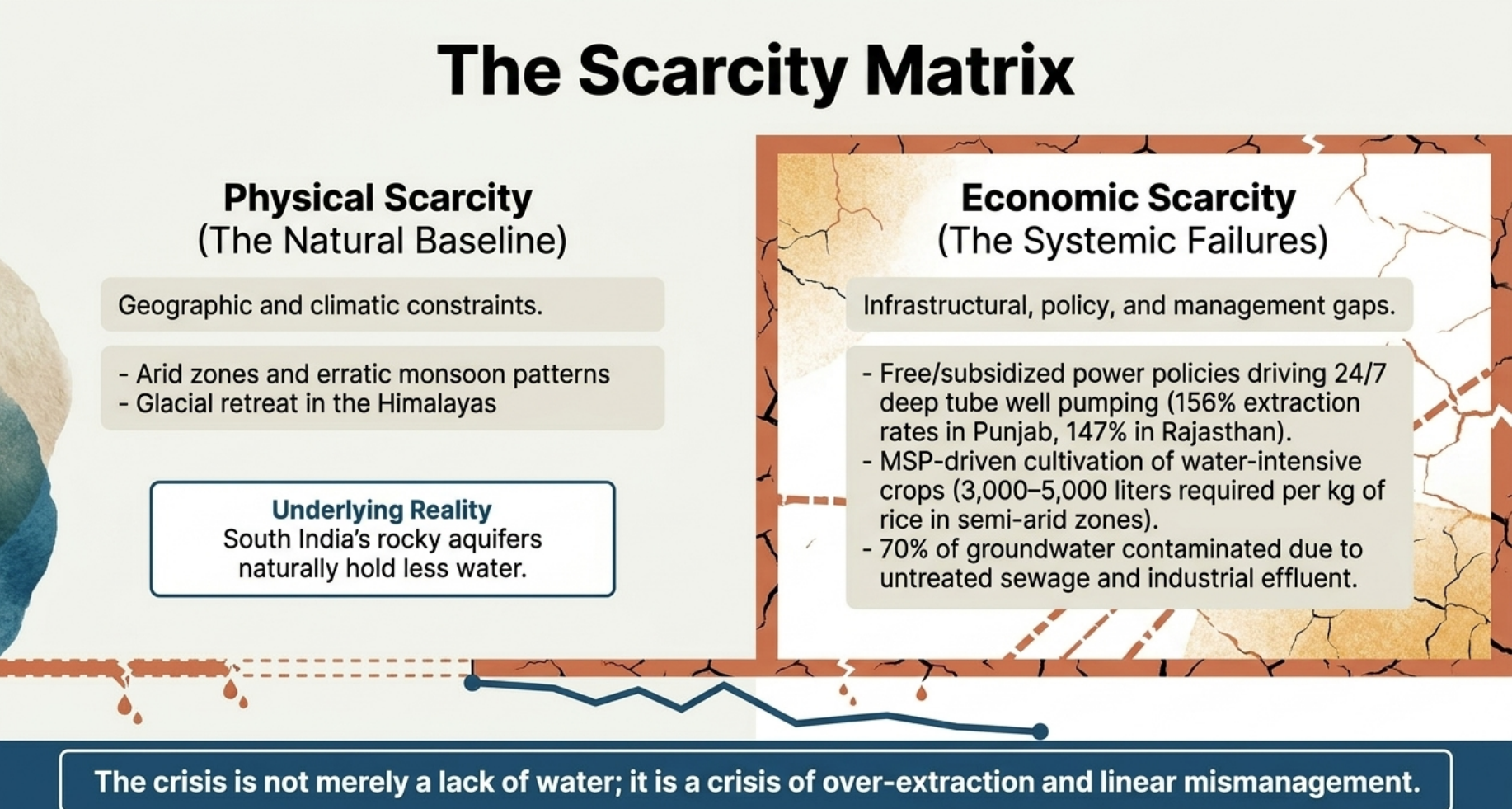
This is not merely a crisis of physical scarcity—where natural water availability is lacking—but a profound crisis of economic scarcity, characterized by inadequate infrastructure, funding, and management to safely clean and distribute existing water. If unaddressed, India’s water demand is projected to exceed available supply twofold by 2030, bringing the existential threat of "Day Zero" to numerous major cities.
II. Sector-Wise Challenges and Causes
- Agricultural Overexploitation: Agriculture dominates freshwater consumption, accounting for roughly 80% to 90% of available supplies. This massive drain is largely driven by flawed policies, such as heavily subsidized or free electricity that encourages 24/7 groundwater pumping. Furthermore, Minimum Support Prices (MSP) guarantee markets for highly water-intensive crops like rice and sugarcane, even in semi-arid regions.
- The Urban Water Scenario & Conflict: Rapid urbanization has placed immense strain on city supplies. While the government suggests a benchmark of 135 liters per capita per day (lpcd) for urban areas, systemic leakages in city pipelines waste a staggering 20% to 35% of the total flow. As urban populations swell, cities are increasingly clashing with state irrigation departments over water stored in dams.
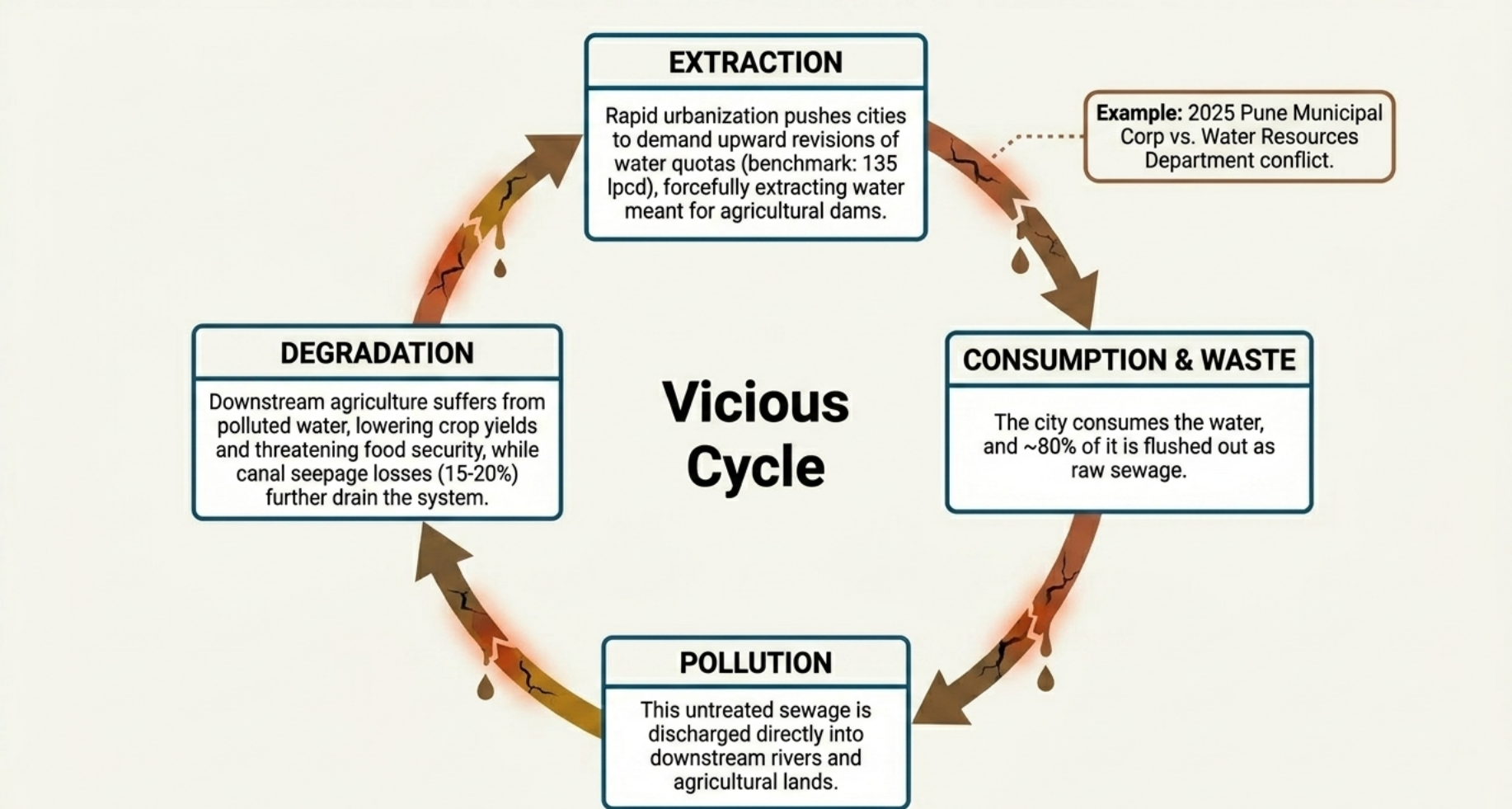
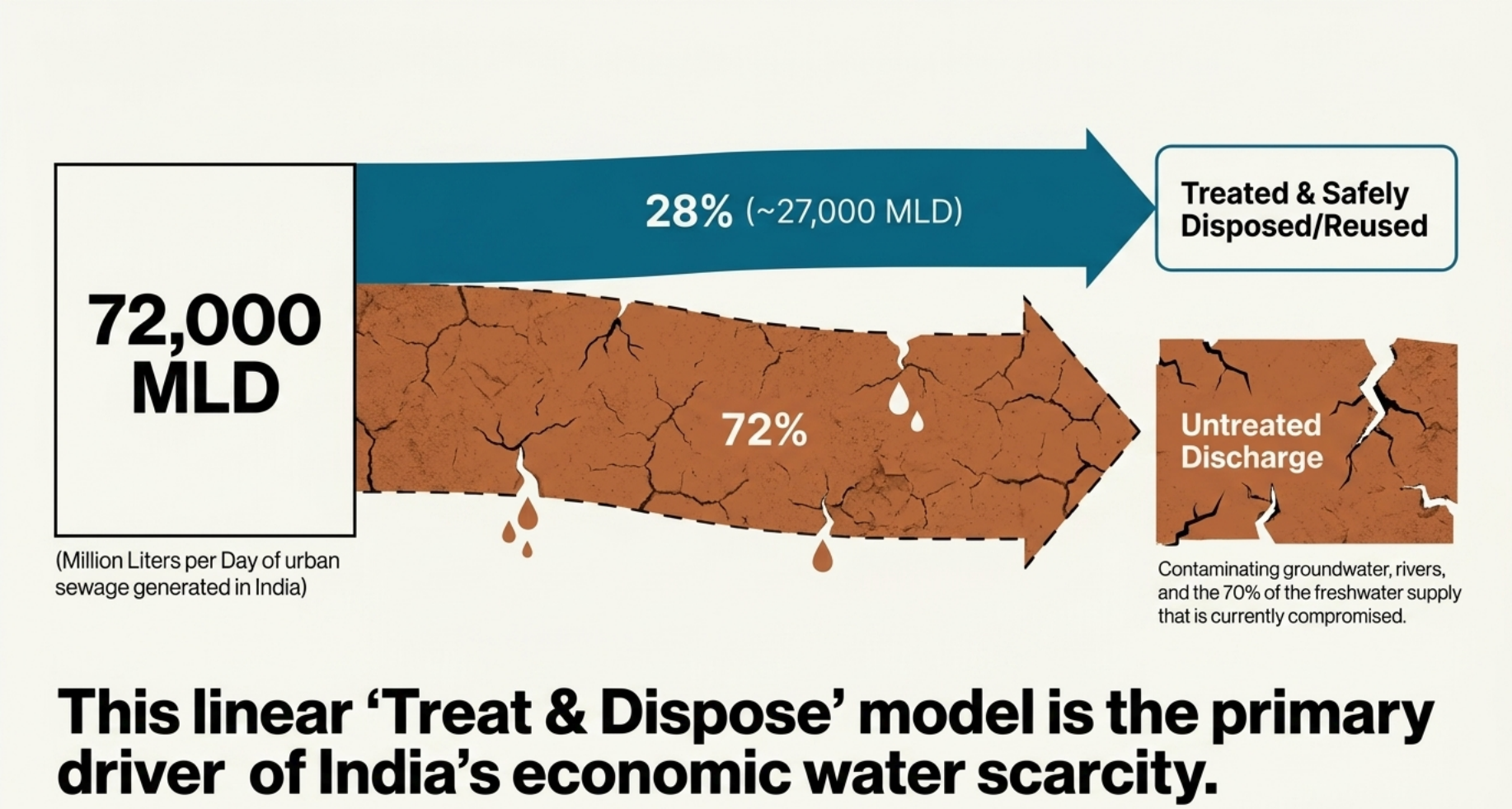
- Industrial Use and The Wastewater Gap: India's urban areas generate over 72,000 million liters per day (MLD) of wastewater, yet the installed treatment capacity handles only about 31,841 MLD. Consequently, nearly 70% of this wastewater flows untreated into rivers, lakes, and groundwater, polluting the freshwater bodies that sustain us.
- Climate Change Multipliers: Erratic monsoons, violent downpours, and retreating Himalayan glaciers are destabilizing natural replenishment cycles. This climate variability drastically impacts surface storage; for example, national reservoir storage pre-monsoon was recently recorded at a perilous 28% of total live capacity.
III. The Multi-Faceted Impacts
- Economic Consequences: The failure to mitigate this crisis carries an immense financial burden. NITI Aayog warns that the water crisis could cost India 6% of its GDP by 2050.
- Health and Social Toll: Around 200,000 people die every year due to inadequate access to safe water. Over-extraction forces communities to tap deeper into toxic aquifers, exposing them to geogenic contamination like arsenic and fluoride.
- Ecological Degradation: Natural water bodies are disappearing at an alarming rate. A staggering 70% of wetlands and water bodies in Jammu & Kashmir have shrunk or vanished since the 1960s. Rivers that were once perennial are turning seasonal.
- Federal Friction: Severe scarcity amplifies inter-state river disputes, such as those over the Kaveri and Krishna rivers, and raises geopolitical tensions over transboundary rivers like the Brahmaputra.
IV. Government Interventions: Successes and Paradoxes
Government initiatives have made monumental infrastructure strides, yet they have also highlighted a key institutional paradox:
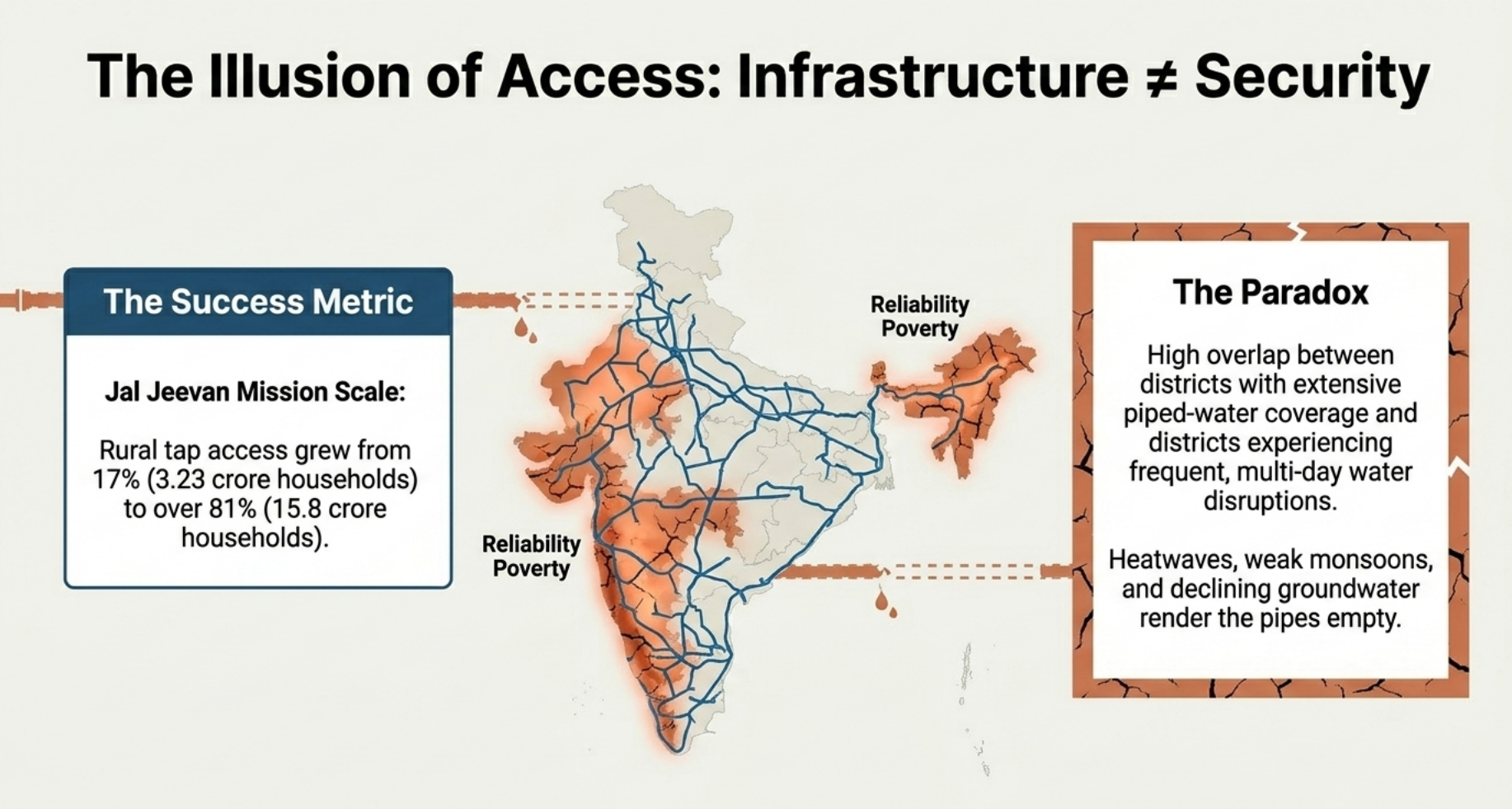
- Major Infrastructure Successes: The government's Jal Jeevan Mission has been transformative, raising rural tap water coverage from just 17% at launch to over 81%. This has saved millions of women an estimated 5.5 crore person-hours daily previously spent fetching water. Concurrently, the Swachh Bharat Mission has averted an estimated 3 lakh diarrhea deaths, and the Namami Gange program has successfully reduced effluent discharge and improved dissolved oxygen levels in the Ganga basin.
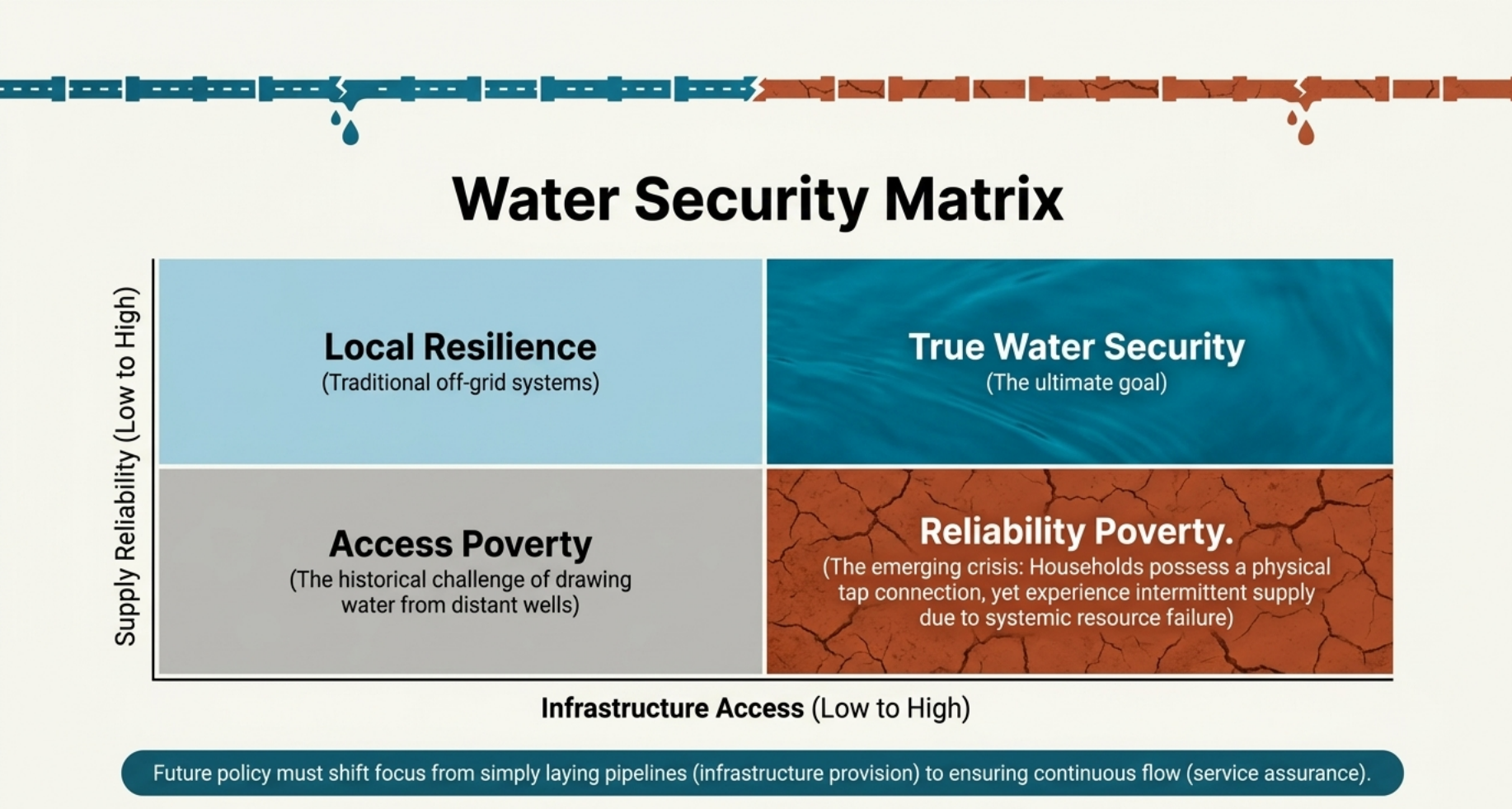
- The "Reliability Poverty" Paradox: Despite the unprecedented expansion of pipes and taps, recent analysis of NFHS-5 data reveals a counterintuitive reality: districts with greater access to piped-water systems are often more likely to report severe water supply disruptions. This highlights a shift from "access poverty" to "reliability poverty." A household might possess a physical tap, but erratic reservoir levels, power failures, or extreme heat waves mean the tap frequently runs dry, proving that infrastructure coverage and service reliability are distinct challenges.
V. Emerging Solutions and Paradigm Shifts (The Way Forward)
Addressing these challenges requires a structural transition in how water is valued, treated, and traded across sectors:
1. The Circular Economy and Wastewater Reuse
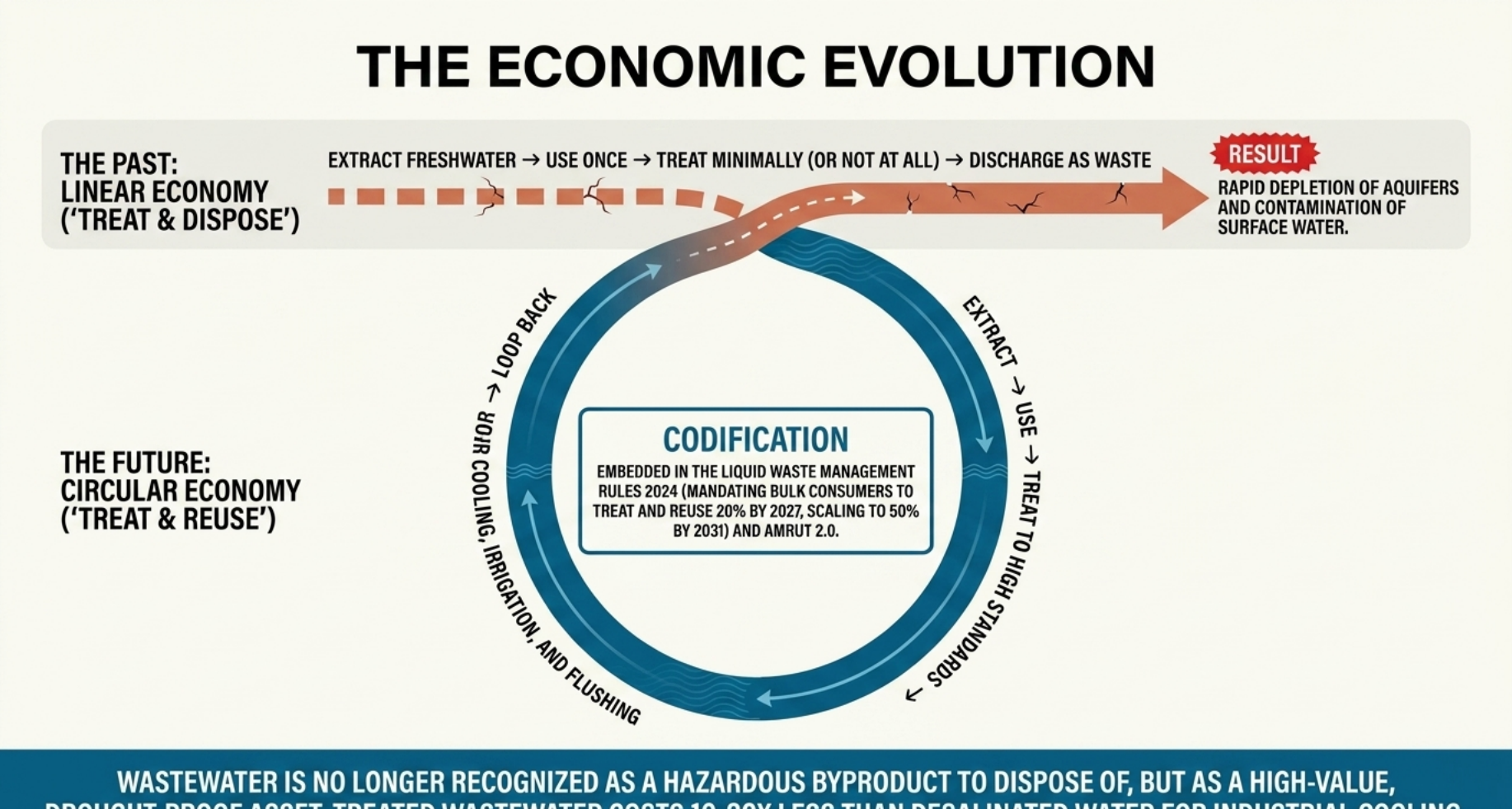
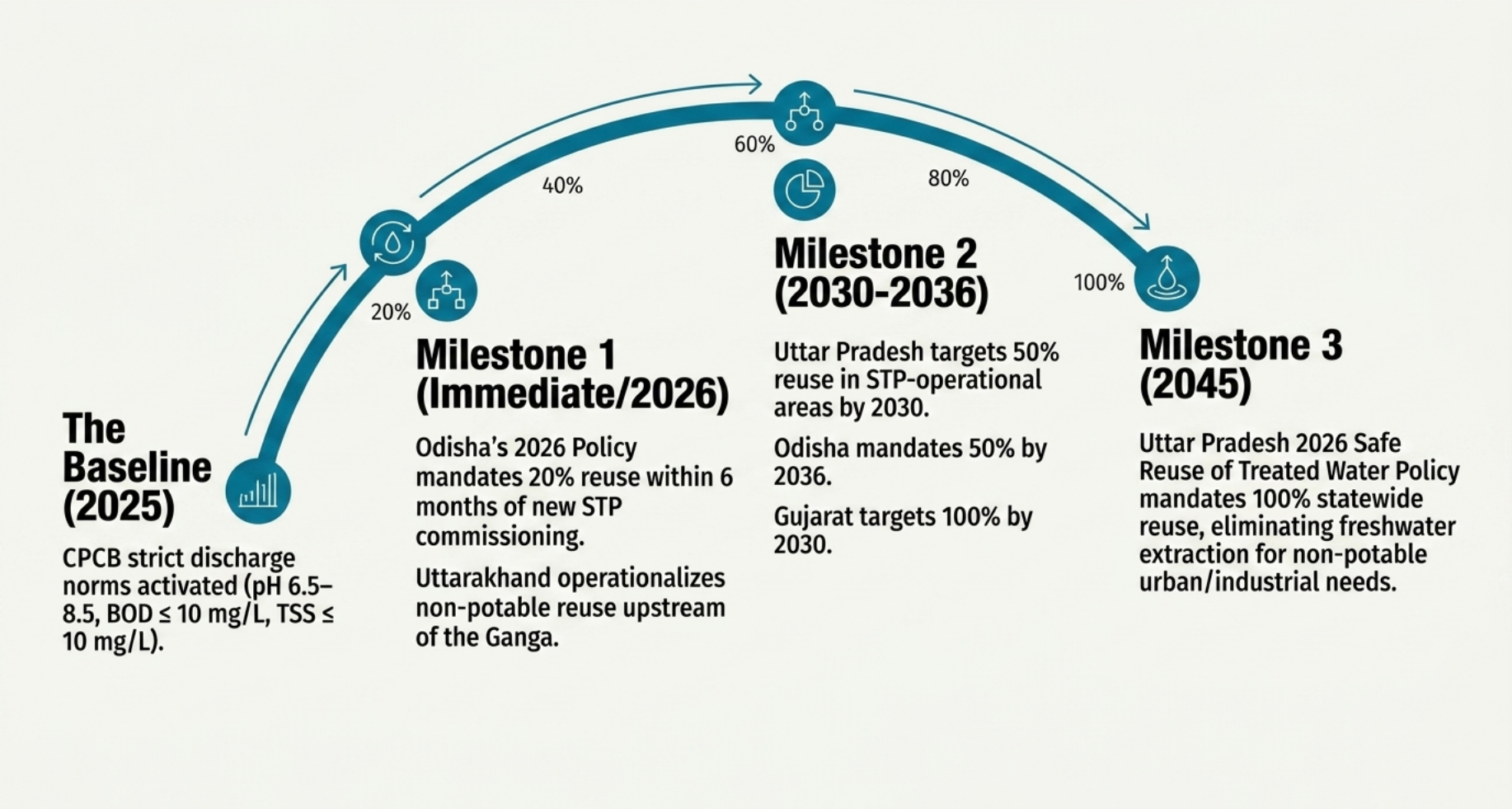
We are witnessing a pivotal shift in treating wastewater as a resource rather than a disposal problem. Uttar Pradesh has approved an ambitious Safe Reuse of Treated Water Policy targeting 50% reuse by 2030 and 100% by 2045. Odisha has followed suit, mandating 20% reuse within just six months of STP commissioning in operational areas. These frameworks align with the Central Government's Liquid Waste Management Rules, which mandate bulk consumers to reuse treated wastewater.
2. Water Credits and Hydrological Paradigms
To optimize conservation, policy must distinguish between two hydrological categories: Blue Water (surface and groundwater) and Green Water (soil moisture absorbed by plants). While Blue water has traditionally been the focus of concrete canals and heavy pumping, Green water represents the critical foundation for rain-fed agriculture.
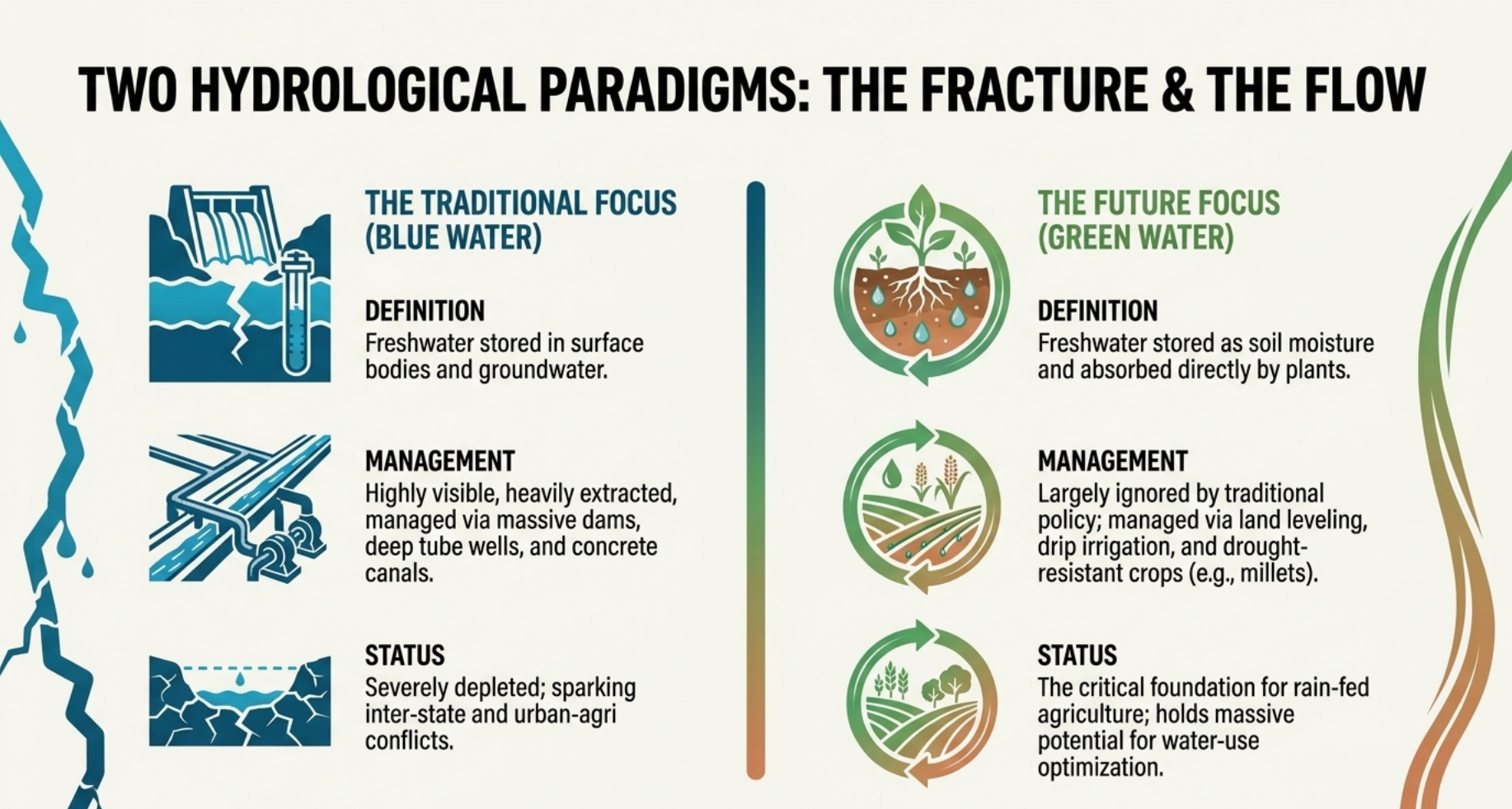
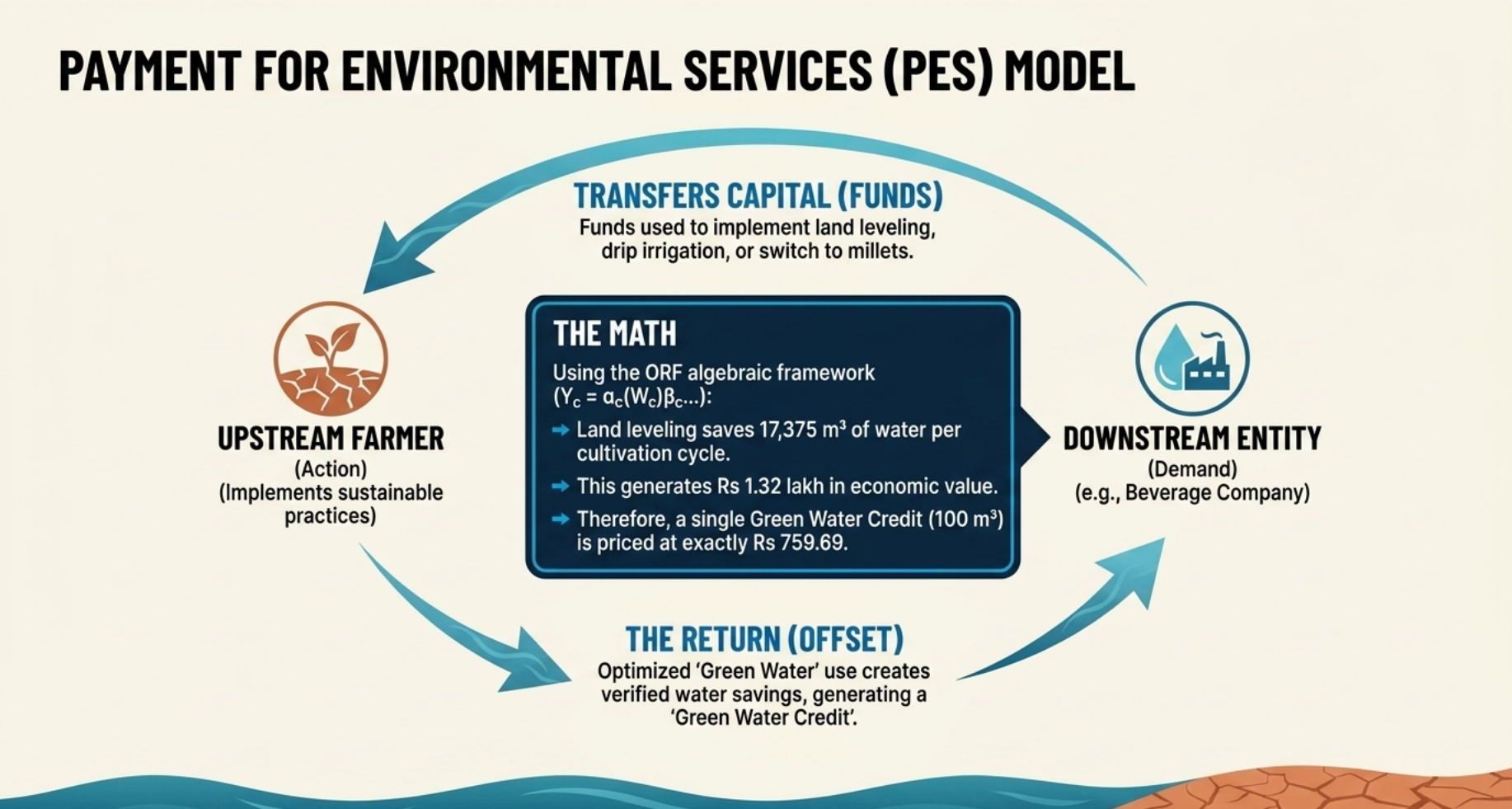
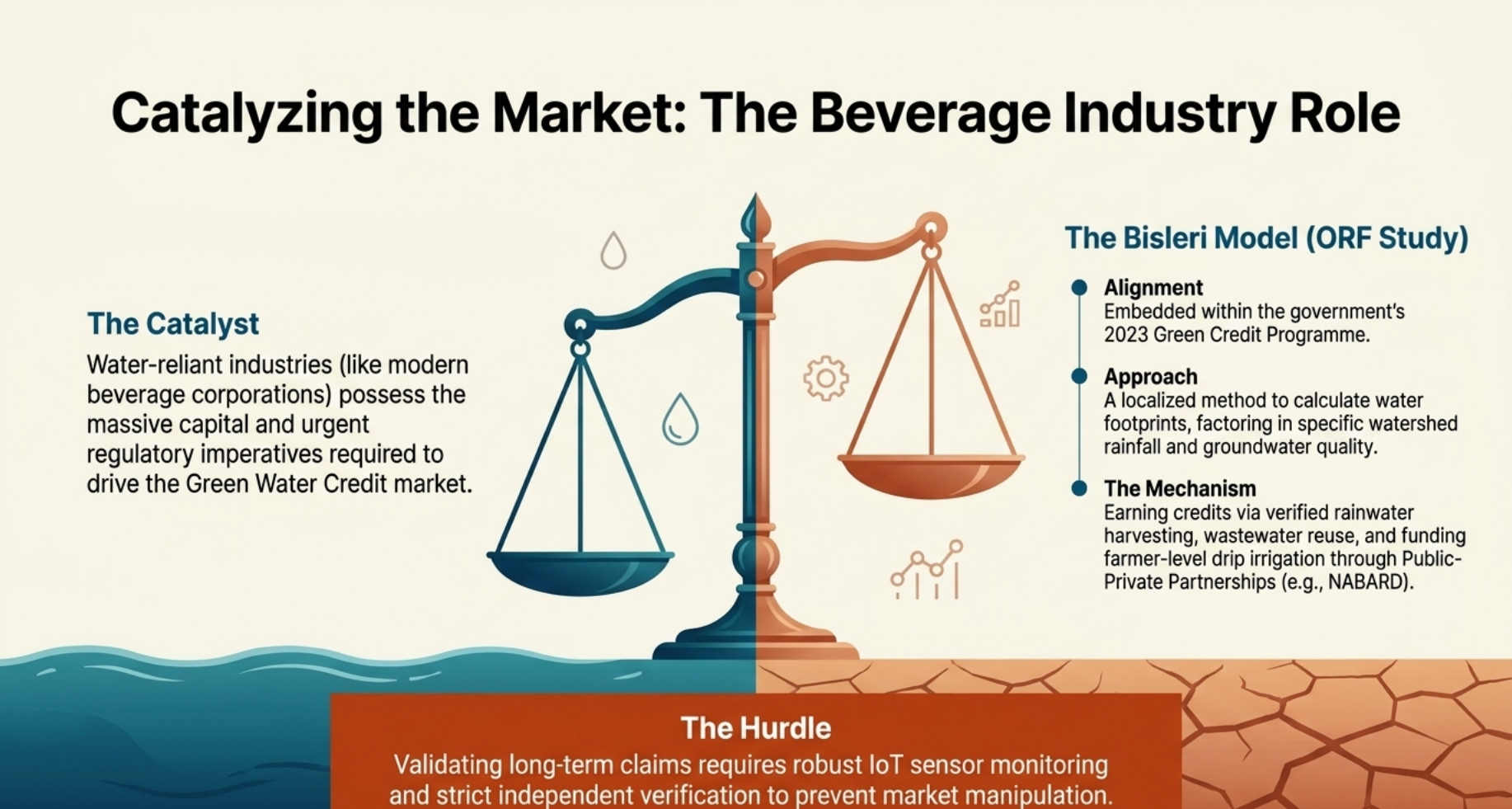
To combat groundwater over-extraction, models for Green Water Credits (GWCs) are emerging. Modeled on carbon credits, GWCs offer financial incentives to farmers who optimize green water through practices like drip irrigation, mulching, and planting drought-resistant crops (e.g., millets). Downstream entities and industries can purchase these credits, offsetting their own footprint and funding rural conservation.
3. Reviving Traditional Solutions and Governance Reforms
Modern infrastructure is increasingly being paired with indigenous conservation practices like Ahar Pynes (Bihar), Johads (Rajasthan), and Kudimaramath (Tamil Nadu). Planners are also pushing for "Sponge Cities" that utilize permeable materials and rain gardens to absorb runoff, rather than flushing it away. On the governance front, the Mihir Shah Committee advocates for merging the Central Water Commission and the Central Ground Water Board into a unified National Water Commission, managing surface and groundwater as a single, interconnected ecosystem.
VI. Conclusion: The IWRM Ecosystem
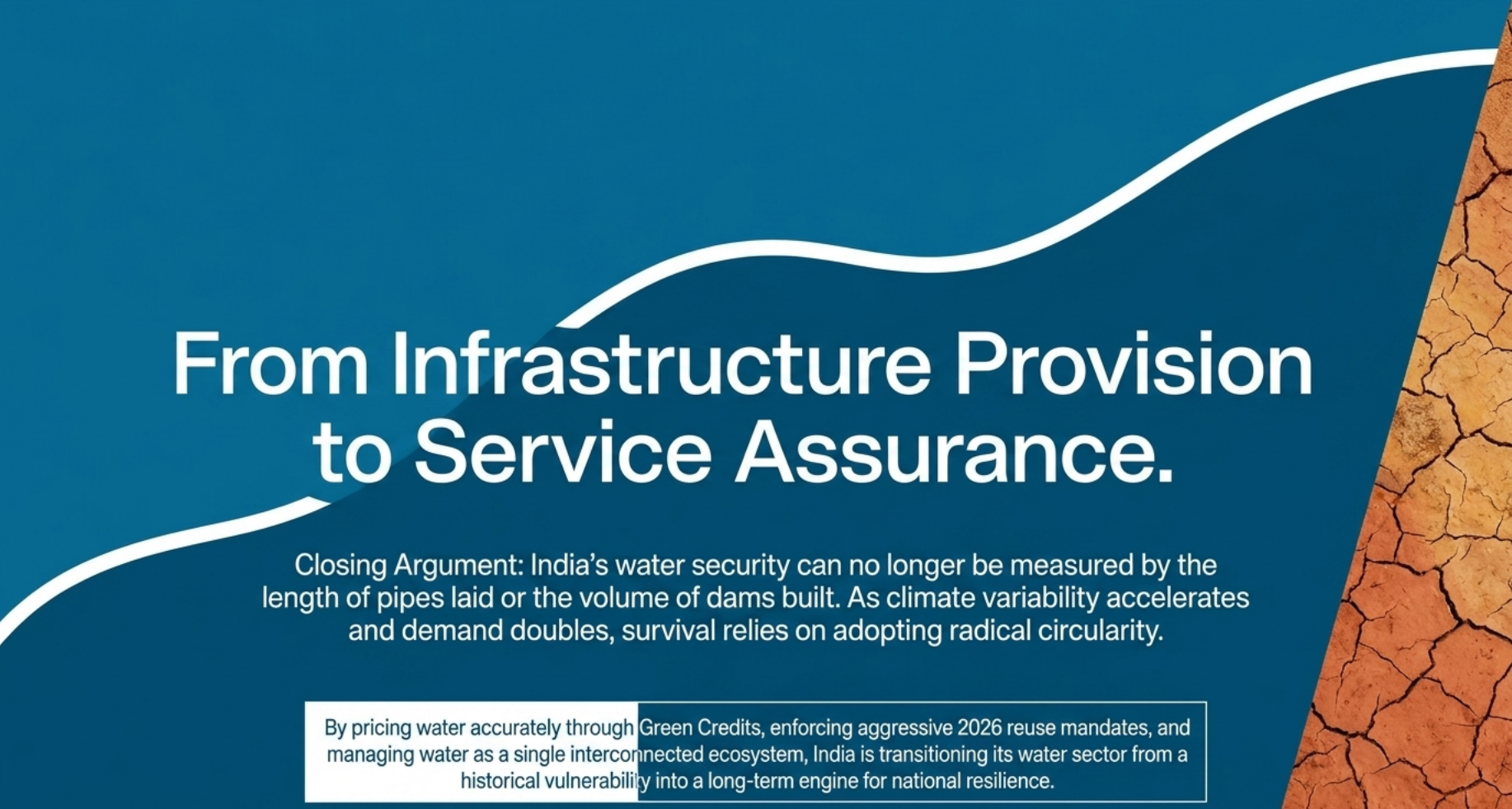
India is entering a critical new phase where the success of water policies can no longer be judged simply by the length of pipes laid, but by the guarantee that water will flow when it is needed most. Achieving comprehensive water security requires balancing social equity, economic efficiency, and environmental sustainability.
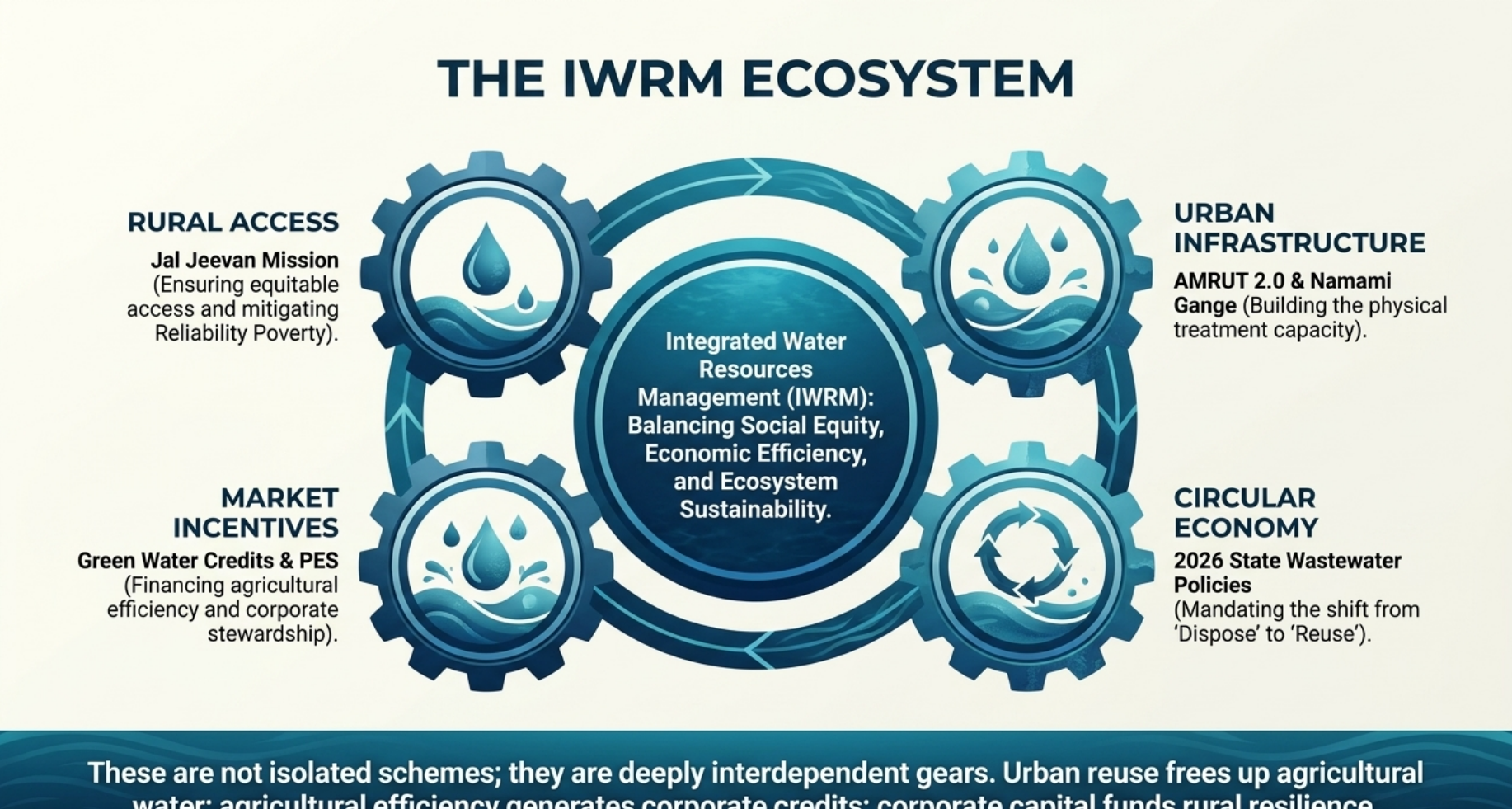
By treating drinking water, agriculture, wastewater reuse, and climate resilience as one interconnected ecosystem—and utilizing circular economy models, Green Credits, and strict reuse mandates—India is transitioning its water sector from a vulnerability into a long-term engine for national resilience.

Study Smarter on GyanGram
Swipeable flashcards. PYQ-mapped topics. Built for UPSC Prelims.