 GyanGram
Next-Generation Sequencing & Precision Oncology: Healthcare Accessibility in India
A major revolution is currently transforming cancer diagnosis and treatment globally. The shift from standard, one-size-fits-all chemotherapies to precision oncology relies heavily on advanced genetic profiling. Central to this change is Next-Generation Sequencing (NGS), a technology that unlocks targeted cancer therapies. For UPSC aspirants, this topic spans GS Paper III (Biotechnology, Intellectual Property Rights, and Science & Technology) and GS Paper II (Public Health and Governance).
I. Understanding Next-Generation Sequencing (NGS)
Historically, molecular diagnostics relied on single-gene testing, which analyzed a single fragment of DNA at a time to identify mutations. While useful, this approach is slow and often fails to capture the full genetic profile of complex tumors.
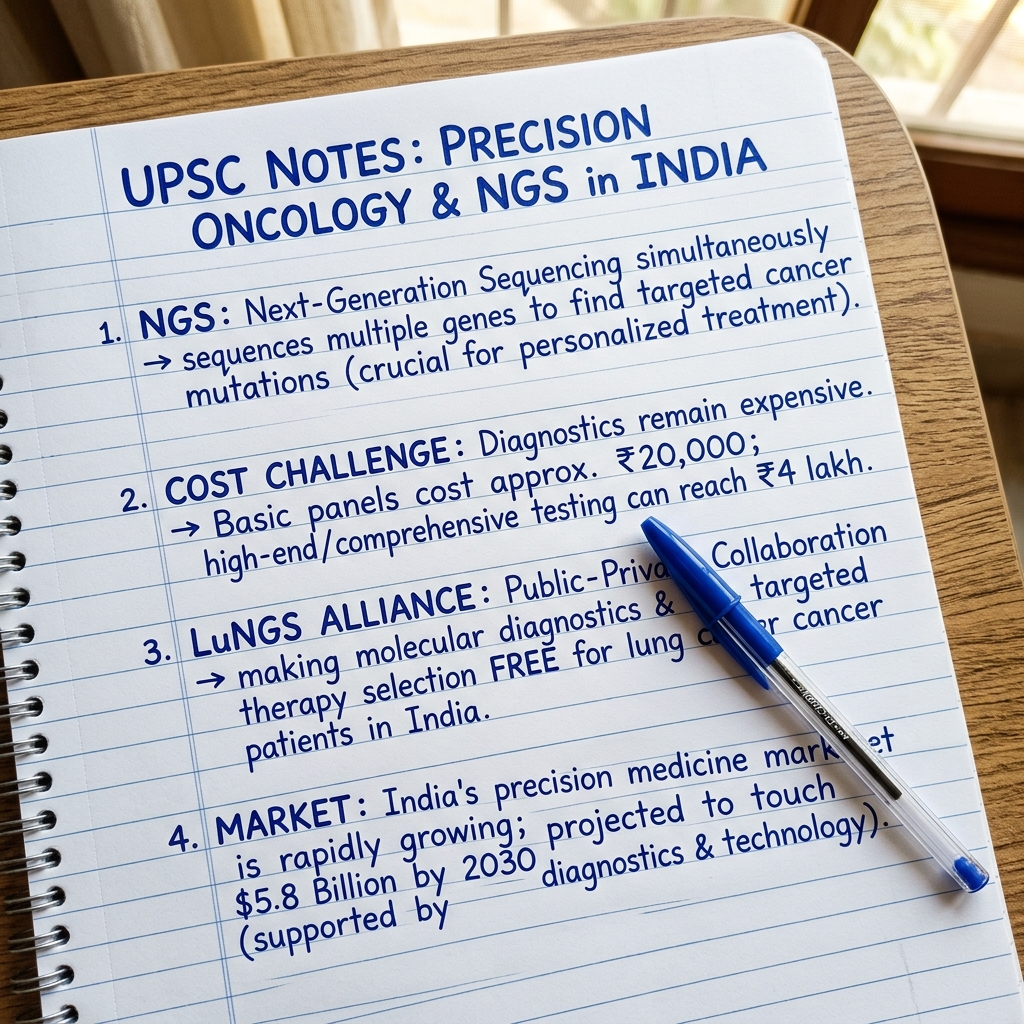
In contrast, Next-Generation Sequencing (NGS) is a high-throughput technology that allows laboratories to analyze a tumor's multiple genetic codes simultaneously. NGS enables oncologists to:
- Identify multiple actionable mutations in a single diagnostic run.
- Detect inherited cancer risks.
- Understand tumor heterogeneity (variations within the same tumor).
- Map treatment resistance and track disease evolution at the single-cell level.
II. The Cost Barrier in India
Despite its clinical benefits, the cost of NGS remains a major barrier to widespread adoption in India. While a basic NGS panel starts at approximately ₹20,000, comprehensive, high-end genomic profiling can cost up to ₹4 lakh. Because the vast majority of healthcare expenses in India are paid out-of-pocket, these advanced diagnostics are financially inaccessible for most patients, often leading to delayed testing or treatment decisions.
III. The LuNGS Alliance: A Case Study in Public-Private Collaboration
To bridge the diagnostic access gap, a unique initiative called the Lung Cancer Genomic Solutions (LuNGS) Alliance was established. Initiated by the Cancer Research and Statistic Foundation, this multi-stakeholder collaboration brings together public and private hospitals, oncologists, pharmaceutical companies, and genomic testing startups (such as 4BaseCare) to provide free NGS tests to lung cancer patients across India.
By May 2026, the alliance achieved significant milestones:
- Over 6,600 patients received free molecular testing.
- Over 1,100 oncologists utilized the program to guide treatment decisions.
- The program helped doctors in Tier-2 and Tier-3 towns make evidence-based, targeted therapy decisions that were previously unavailable due to financial constraints.
IV. Market Projections and Economic Impact
The genomics and precision medicine sector is poised for exponential growth in India over the coming decade. By 2030, the market dynamics are projected as follows:
| Market Segment | Projected Value (by 2030) | Growth Multiplier |
|---|---|---|
| Genome Sequencing Market | $1.5 Billion | Consistent double-digit growth |
| Precision Medicine Market | $5.8 Billion | Fivefold increase from current levels |
V. UPSC Relevance and Public Health Takeaways
For civil services preparation, the intersection of genomics and public health highlights several key administrative themes:
- Reducing Out-of-Pocket Expenditure (OOPE): High diagnostic and therapeutic costs are a leading driver of medical debt in India. Alliances like LuNGS demonstrate how collaborative models can reduce OOPE.
- Geographic Equity in Healthcare: Access to advanced diagnostics is often concentrated in metropolitan tier-1 cities. Reaching smaller cities and rural health centers is essential to ensure equitable health outcomes.
- Biotechnology & Indigenous R&D: Building local genomic databases (such as the GenomeIndia Project led by the Department of Biotechnology) is necessary to customize precision medicine for India's diverse genetic profiles and reduce reliance on western diagnostic panels.
- Regulatory and Ethical Oversight: Widespread genetic sequencing requires robust data protection laws to safeguard sensitive genomic data from commercial exploitation or unauthorized sharing.
Conclusion
The future of cancer care and chronic disease management lies in personalized, data-driven medicine. Achieving this requires scaling technologies like NGS, reducing diagnostic cost barriers, and fostering multi-stakeholder partnerships. Promoting public-private collaborations is key to ensuring that advanced biotechnology benefits all segments of society, contributing to health equity across India.

Learn smarter with GyanGram
Free on Android & Web. Turn scroll time into real progress.