 GyanGram
UPSC Mains 2025 Essay Paper Analysis: Deciphering the Philosophical and Topical Themes
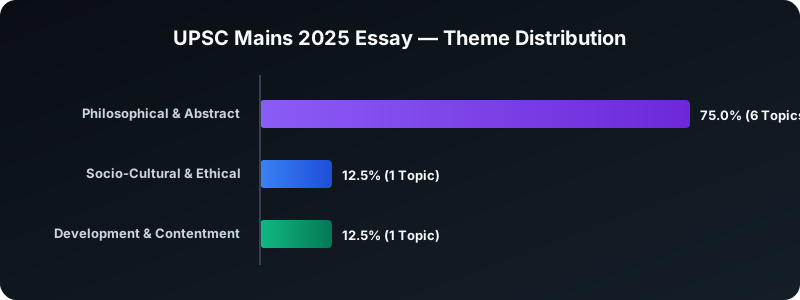
The UPSC CSE Mains 2025 Essay Paper continues the trend of favoring deeply philosophical and reflective topics over pure socio-economic ones. According to GyanGram's analysis of the 8 essay prompts across Section A and Section B, philosophical prompts constitute 75% of the paper, testing an aspirant's abstract thinking, moral grounding, and interdisciplinary linkage.
Key Takeaways
- Philosophical Dominance: 6 out of 8 topics (75%) are abstract or philosophical, making rote-memorized notes ineffective.
- Dynamic Themes: Topics span the nature of truth, strategy/peace, cognitive exploration, and the value of contentment.
- Interdisciplinary Approach: Success requires blending political philosophy, science, history, literature, and ethics.
- Pacing & Structure: Balancing two essays of 1000–1200 words each requires strong time management and structural planning.
Decoding Section A: Action, Perception, and Inner Truths
Section A of the paper consists of four topics that force the writer to engage with classical philosophical dilemmas, strategic patience, and cognitive reflection. Let's break down each topic and examine the direct approach needed:
- "Truth knows no color.": This prompt invites an exploration of objective reality vs. subjective bias. Writers can highlight how political ideologies, cultural prejudices, and media narratives attempt to color the truth, while scientific facts, human rights, and cosmic laws remain absolute.
- "The supreme art of war is to subdue the enemy without fighting.": Drawing directly from Sun Tzu's The Art of War, this essay requires discussing diplomacy, economic leverage, soft power, and conflict prevention. Examples like India’s vaccine diplomacy or the Cold War deterrence fit perfectly.
- "Thought finds a world and creates one also.": A classic epistemological topic. It shows how observation helps us understand the existing world, while creative imagination (scientific innovation, social reforms, literature) builds a new one. Thinkers like Gautama Buddha, Karl Marx, and Steve Jobs illustrate this.
- "Best lessons are learnt through bitter experiences.": This topic addresses resilience and failure. Examples include India's post-1991 economic reforms emerging from a balance-of-payments crisis, or global lessons from pandemics and wars.
Decoding Section B: Time, Life, and Contentment
Section B moves towards the philosophical application of values, patience, and lifestyle ethics. Here, the focus is on the human condition, sustainable living, and perspective:
- "Muddy water is best cleared by leaving it alone.": This Daoist concept promotes Wu-Wei (actionless action) and strategic patience. It applies beautifully to public policy, administrative crises, and diplomacy, where over-reaction can worsen a volatile situation.
- "The years teach much which the days never know.": A reflection on long-term wisdom versus short-term reaction. It fits discussions on environmental policies, climate change action, constitutional stability, and nation-building.
- "It is best to see life as a journey, not as a destination.": This topic critiques hyper-utilitarianism and the obsession with outcomes. In the UPSC context, it resonates with the process of learning and character development over merely clearing the exam.
- "Contentment is natural wealth; luxury is artificial poverty.": Drawing from Socrates and Gandhian economics, this topic critiques modern consumerism. It advocates for sustainable development, ecological conservation, and mental well-being over GDP-obsessed growth.
UPSC 2025 Essay Paper Topic Summary
According to GyanGram's structural mapping, here is the quick breakdown of the topics presented in the paper:
| Section | Topic Statement | Primary Theme | Key Thinkers to Cite |
|---|---|---|---|
| Section A - Q1 | Truth knows no color. | Epistemology / Objectivity | Socrates, Immanuel Kant, Mahatma Gandhi |
| Section A - Q2 | The supreme art of war is to subdue the enemy without fighting. | Statecraft / Diplomacy | Sun Tzu, Kautilya, Machiavelli |
| Section A - Q3 | Thought finds a world and creates one also. | Cognition / Innovation | Buddha, René Descartes, Jean-Paul Sartre |
| Section A - Q4 | Best lessons are learnt through bitter experiences. | Resilience / History | Nietzsche, Swami Vivekananda, Nelson Mandela |
| Section B - Q5 | Muddy water is best cleared by leaving it alone. | Patience / Crisis Management | Lao Tzu (Daoism), Marcus Aurelius |
| Section B - Q6 | The years teach much which the days never know. | Wisdom / Long-term Planning | Ralph Waldo Emerson, B.R. Ambedkar |
| Section B - Q7 | It is best to see life as a journey, not as a destination. | Existentialism / Balance | Rabindranath Tagore, John Dewey |
| Section B - Q8 | Contentment is natural wealth; luxury is artificial poverty. | Ethics / Sustainable Development | Epicurus, Mahatma Gandhi, E.F. Schumacher |
The GyanGram Essay Writing Framework
Writing a high-scoring essay on a philosophical topic requires structural discipline. We recommend the PESTLE + Historical & Individual dimension grid. Begin by clarifying the meaning of the quote in the introduction. Then, systematically explore the theme across History, Politics, Economy, Society, Technology, and International Relations. Conclude with a strong synthesis that links the topic back to governance, ethical administration, and the future of India.
UPSC Mains 2025 Essay Question Paper
Here is the complete question paper with subject tagging, marks, and word limits:
सत्य कोई रंग नहीं जानता है।
Truth knows no color.
बिना लड़े ही दुश्मन को परास्त करना युद्ध की सर्वोच्च कला है।
The supreme art of war is to subdue the enemy without fighting.
विचार एक दुनिया खोजता भी है और एक बनाता भी है।
Thought finds a world and creates one also.
सबसे अच्छे सबक कड़वे अनुभवों से सीखे जाते हैं।
Best lessons are learnt through bitter experiences.
मैले पानी को अकेला छोड़ने से ही उसे सबसे अच्छा साफ़ किया जा सकता है।
Muddy water is best cleared by leaving it alone.
वर्ष बहुत कुछ सिखाते हैं, जो दिन कभी नहीं जानते।
The years teach much which the days never know.
जीवन को एक यात्रा के रूप में देखना सर्वोत्तम है, न कि एक गंतव्य के रूप में।
It is best to see life as a journey, not as a destination.
संतोष स्वाभाविक संपत्ति है; विलासिता कृत्रिम निर्धनता है।
Contentment is natural wealth; luxury is artificial poverty.
Frequently Asked Questions
What was the general theme of the UPSC Mains 2025 Essay Paper?
The UPSC Mains 2025 Essay Paper was heavily dominated by philosophical and abstract topics. Six out of the eight prompts across both sections focused on reflective, ethical, and metaphysical themes.
What were the topics asked in Section A of the 2025 Essay Paper?
Section A featured four topics: (1) Truth knows no color, (2) The supreme art of war is to subdue the enemy without fighting, (3) Thought finds a world and creates one also, and (4) Best lessons are learnt through bitter experiences.
What were the topics asked in Section B of the 2025 Essay Paper?
Section B featured four topics: (1) Muddy water is best cleared by leaving it alone, (2) The years teach much which the days never know, (3) It is best to see life as a journey, not as a destination, and (4) Contentment is natural wealth; luxury is artificial poverty.
How should an aspirant structure a philosophical essay for UPSC?
A philosophical essay should begin with a strong anecdote or quote to set the context. The body should explore multi-dimensional perspectives (individual, societal, political, historical, and international) before concluding with a constructive, forward-looking vision.
Why is the UPSC shifting towards philosophical essays?
The shift towards philosophical essays is designed to test an aspirant's critical thinking, ethical integrity, and capacity to articulate complex, multi-layered arguments under pressure, rather than relying on memorized GS data.

Learn smarter with GyanGram
Free on Android & Web. Turn scroll time into real progress.